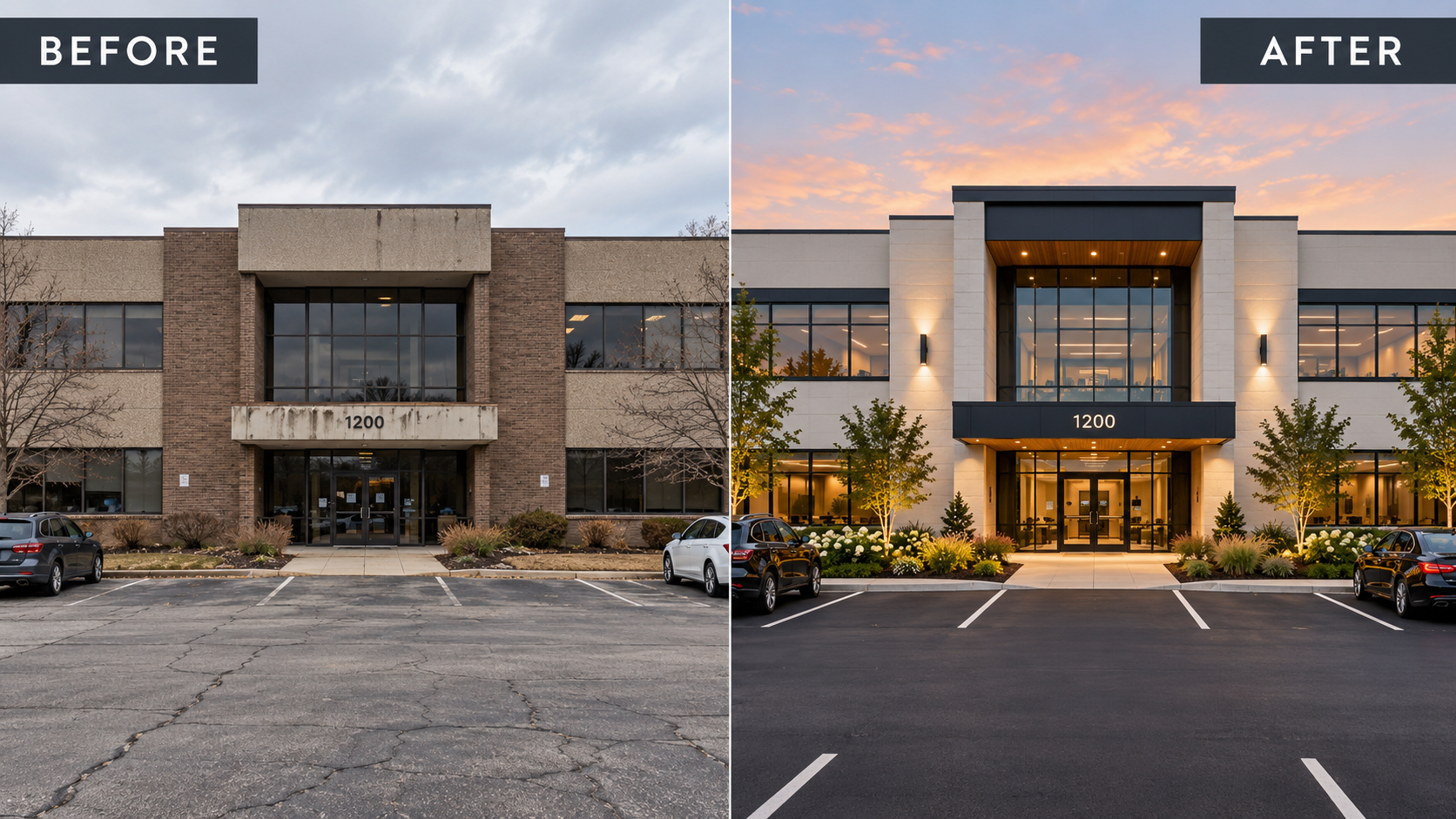
A commercial property can be structurally sound, well located and still underperform. Vacancy may stay high. Leasing activity may be slow. The building may attract interest but not the right tenants. In many cases, the problem is not simply the market or the asking rate. The property may no longer be positioned for the market it is trying to serve.
That is where commercial property repositioning comes in. Repositioning is the process of changing how a property is used, configured, presented or marketed so it can compete more effectively and better support an owner's goals.
For a Metro Detroit commercial property, repositioning might be as simple as updating common areas and signage. It can also involve subdividing a large floor plate, creating new entrances, improving parking flow, renovating vacant suites, changing the target tenant profile or even reconsidering the property's highest and best use.
What Commercial Property Repositioning Actually Means
Repositioning is broader than renovation. Renovation focuses on the physical building. Repositioning starts with the business problem: Why is this property not performing the way it should?
The answer may involve the physical condition of the building, but it can also involve leasing strategy, tenant mix, branding, visibility, space configuration, operating costs or the way the property is being presented to the market.
A repositioning plan can include:
- Improving exterior appearance, signage and curb appeal.
- Renovating common areas, lobbies, restrooms or vacant suites.
- Dividing large spaces into smaller, more marketable suites.
- Combining small suites when larger users are the stronger target market.
- Creating direct exterior entrances or improving wayfinding.
- Updating lighting, flooring, paint and other visible finishes.
- Improving mechanical, electrical or building systems when they limit usability.
- Changing how the property is branded and marketed.
- Targeting a different tenant type or use.
- Reevaluating rents, lease structure and concessions.
The central question
Repositioning is not about spending money simply to make a building look newer. It is about identifying the changes most likely to improve how the property performs.
Signs a Commercial Property May Need Repositioning
Owners often begin thinking about repositioning after a long vacancy, but the warning signs can appear much earlier.
1. The property gets inquiries but few serious prospects
If prospective tenants consistently look at the space but do not move forward, there may be a disconnect between the property's price, condition, layout or perceived value.
2. The building is competing primarily on price
Lowering rent can generate activity, but it does not solve every problem. If a property must continually undercut competing buildings to attract attention, it may need a stronger value proposition.
3. Large spaces are difficult to lease
A floor plan that worked for one large occupant may not match current demand. In some buildings, creating smaller suites with shared amenities can open the property to a much larger pool of businesses.
4. The property's appearance does not match the target tenant
Tenants form an opinion before they ever enter a suite. Exterior condition, signage, landscaping, parking areas, corridors and common spaces all influence how the property is perceived.
5. The building has good fundamentals but weak market visibility
A well-located building can still be overlooked if the photography, listing copy, signage or online presentation fails to communicate why the space matters to a prospective tenant.
A Practical Repositioning Process
Because every building is different, repositioning should begin with evaluation rather than construction.
Step 1: Understand the owner's objective
The right strategy depends on the desired outcome. Is the goal to stabilize occupancy, improve cash flow, prepare the property for sale, attract a stronger tenant mix, reduce ongoing maintenance issues or support a longer-term redevelopment plan?
Step 2: Evaluate the market position
The property should be compared with the alternatives available to the tenants it is trying to attract. That means looking beyond rental rate and considering location, visibility, parking, access, condition, suite sizes, amenities and ease of occupancy.
Step 3: Walk the property like a prospective tenant
Owners naturally become accustomed to their buildings. A fresh evaluation can reveal issues that are easy to overlook: confusing entrances, dated hallways, poor lighting, worn finishes, awkward suite layouts, hidden signage or spaces that do not photograph well.
Step 4: Prioritize improvements by impact
Not every improvement deserves the same priority. A successful repositioning plan separates necessary repairs from cosmetic upgrades and distinguishes improvements that materially affect leasing from items that are simply nice to have.
Step 5: Reintroduce the property to the market
Once improvements are made, the marketing should change with the property. Updated photography, clearer positioning, revised listing copy, better signage and targeted outreach can help communicate that the opportunity has changed.
Repositioning Does Not Always Mean a Major Renovation
One of the biggest misconceptions about repositioning is that it requires a major capital project. Sometimes it does. Often it does not.
A relatively modest improvement plan can make a substantial difference when it addresses the right problem. Fresh paint, improved lighting, flooring replacement, simplified signage, refreshed landscaping and a better leasing presentation may be enough to change how a building is received.
At the other end of the spectrum, a property may need more significant work: new mechanical systems, façade improvements, suite reconfiguration, accessibility improvements, major common-area renovation or a change in use. Those decisions should be driven by the property's strategy rather than by renovation for renovation's sake.
How Repositioning Supports Commercial Leasing
Leasing and repositioning should not be treated as separate conversations. Leasing activity provides direct feedback about how the market sees the property.
If tenants repeatedly raise the same objections, those objections can become useful data. A building that loses prospects because suites are too large may need to be divided. A property that looks dated relative to nearby alternatives may need visible improvements. A building that is difficult to find may need better exterior identity and signage.
The goal is to remove unnecessary reasons for a qualified tenant to say no.
For owners with active vacancies, BLD Companies' commercial leasing services can be paired with property strategy so the leasing plan reflects both market conditions and the physical realities of the building.
Why Property Marketing Matters After Repositioning
A building can be significantly improved and still struggle if the market never sees the difference. Repositioning should therefore include a plan for how the property will be presented after the work is complete.
That may involve new photography, rewritten property descriptions, updated online listings, social media exposure, property-specific web pages, new signage and direct outreach to likely tenants or brokers.
The message should focus on the opportunity the property now offers—not merely a list of improvements that were made.
Reposition, Lease or Sell?
Repositioning is one option, not an automatic answer. In some cases, selling the property may be the better path. In others, the building may perform well with a focused leasing and marketing effort and very little physical work.
That is why the decision should be evaluated from multiple angles: current condition, tenant demand, potential renovation costs, likely rental income, timing, ownership goals and the property's long-term potential.
BLD Companies approaches these questions from both the transaction and physical-property sides of commercial real estate. That makes it possible to look at what the market wants, what the building needs and whether the investment required to bridge that gap makes sense for the owner's objective.
A better property strategy starts with the right question
Instead of asking, “What should we renovate?” start with, “What is preventing this property from performing better?” The answer creates a clearer path toward the improvements, leasing strategy and marketing effort that follow.
The Bottom Line
Commercial property repositioning is ultimately about alignment: aligning the physical building with the market, the space with the tenant, and the investment with the owner's goals.
For older office buildings, mixed-use properties, retail spaces and other commercial assets throughout Metro Detroit, even a well-located property can lose momentum when its layout, appearance or market position no longer fits current demand. A thoughtful repositioning plan can help identify whether the solution is renovation, reconfiguration, better marketing, a new leasing strategy—or a combination of all four.